


Top Places to Visit in Switzerland for Scenic Views
Top Places to Visit in Switzerland for Scenic Views
Switzerland is synonymous with breathtaking landscapes—towering peaks, glacial lakes, and alpine meadows that stretch endlessly. For travelers seeking unforgettable vistas, the country offers some of the most scenic viewpoints in Europe. From the iconic Matterhorn to hidden mountain passes, these destinations deliver panoramic beauty without requiring expert climbing skills. Whether you’re driving, hiking, or riding a scenic train, each location provides a unique perspective of Switzerland’s natural grandeur.
Matterhorn: The Iconic Peak of Zermatt
The Matterhorn is more than a mountain—it’s a symbol of alpine excellence. Rising 4,478 meters above sea level, its pyramid-shaped summit dominates the skyline of Zermatt, a car-free village at the foot of the Alps. The best views come from the Gornergrat Railway, which climbs to 3,089 meters, offering sweeping vistas of the Matterhorn and surrounding glaciers.
For a quieter experience, walk the five-lake trail (5-Seenweg). This moderate 9-kilometer hike passes five crystal-clear lakes, each reflecting the Matterhorn in different light. The Schwarzsee lake, reachable by a short gondola ride, is especially photogenic at sunrise.
Zermatt itself is a charming base, with traditional chalets and world-class dining. Stay overnight to catch the golden hour glow on the peak. Avoid summer weekends if possible—crowds can diminish the experience.
Jungfraujoch: The Top of Europe
Known as the “Top of Europe,” Jungfraujoch sits at 3,454 meters and is accessible via the Jungfrau Railway, one of the highest train lines in the continent. The journey from Kleine Scheidegg takes about 50 minutes, passing through the Eiger and Mönch mountains via tunnels carved into the rock.
At the summit, visitors find an observation deck, an ice palace, and the Sphinx Observatory—one of the highest astronomical research stations in the world. On clear days, you can see as far as Germany and France. The Aletsch Glacier, a UNESCO World Heritage Site, unfolds below like a frozen river.
Book tickets in advance, especially in July and August. The train sells out quickly, and visibility can be poor during afternoon cloud cover. Dress warmly—even in summer, temperatures rarely rise above freezing.
Lake Geneva: Reflections of the Alps
Lake Geneva, or Lac Léman, stretches 73 kilometers between Geneva and Montreux, framed by vineyards and snow-capped peaks. The lake’s calm waters mirror the Dents du Midi mountain range, creating mirror-like reflections that photographers adore.
Take a cruise from Montreux to Vevey for unobstructed views of Chillon Castle and the terraced vineyards of Lavaux. Alternatively, ride the GoldenPass Line train along the northern shore. The segment between Montreux and Zweisimmen offers large windows and open-air observation cars.
For a bird’s-eye view, hike the Rochers de Naye trail. This 10-kilometer path leads to a summit at 2,042 meters, where you’ll find a restaurant, a marmot park, and 360-degree views of the lake and Alps. The funicular from Glion reduces the hike to a manageable 30-minute walk.
The Swiss Alps by Train: Glacier Express and Bernina Express
Glacier Express: A Journey Through the Heart of the Alps
The Glacier Express is not the fastest train in Switzerland—it takes eight hours to travel 291 kilometers from Zermatt to St. Moritz—but it’s one of the most scenic. Nicknamed the “slowest express train in the world,” it traverses 291 bridges and passes through 91 tunnels.
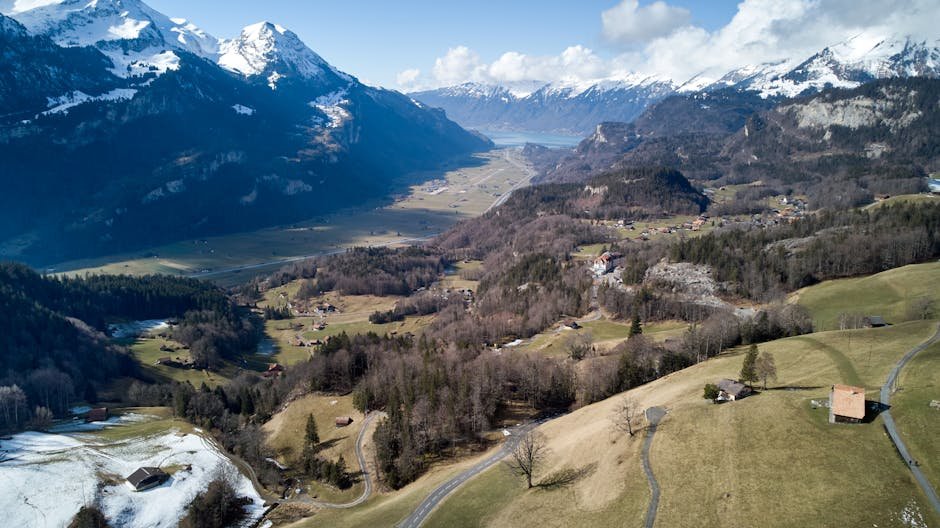
Highlights include the Oberalp Pass at 2,033 meters, the Landwasser Viaduct with its curved stone arch, and the Rhine Gorge, often called the “Grand Canyon of Switzerland.” Large panoramic windows and a multi-language audio guide enhance the experience.
Reserve a seat on the right side when traveling eastbound for the best mountain views. First-class tickets include a gourmet meal served at your seat. Book at least two months ahead during peak season.
Bernina Express: Crossing the Alps to Italy
The Bernina Express connects Chur, Switzerland’s oldest city, to Tirano, Italy, crossing the Alps without using tunnels. The route climbs to the Bernina Pass at 2,253 meters, then descends through glaciers, alpine meadows, and Italian vineyards.
The Brusio Spiral Viaduct is a highlight—a circular railway that allows the train to gain elevation in a tight space. In winter, the landscape turns into a snowy wonderland; in summer, wildflowers dot the slopes.
For the full experience, ride the train during daylight hours. The morning departure from Chur offers the clearest skies. Consider extending your trip with a bus connection to Lugano for lakeside views.
Lauterbrunnen Valley: The Valley of 72 Waterfalls
Nestled between the Eiger, Mönch, and Jungfrau mountains, Lauterbrunnen Valley is a glacial trough with cliffs rising over 1,000 meters on either side. The name means “many springs,” and the valley lives up to it with 72 waterfalls cascading down the rock faces.
Staubbach Falls, the third-highest waterfall in Switzerland, drops 297 meters near the village center. Walk behind the curtain of water for a misty, refreshing experience. Trümmelbach Falls, hidden inside the mountain, are even more impressive—ten glacier-fed waterfalls thunder through a cave system, accessible by elevator and walkways.
The valley is a gateway to Grindelwald and Wengen, both popular for hiking and skiing. In summer, take the Wengen cable car to the Männlichen viewpoint for a panoramic shot of the Eiger North Face. Avoid visiting in late autumn when many trails close due to snow.
Mount Pilatus: The Dragon’s Lair
Mount Pilatus, near Lucerne, is famous for its dragon legends and the world’s steepest cogwheel railway. The line from Alpnachstad climbs at a 48% gradient, a engineering marvel completed in 1889. The ride takes 30 minutes and offers ever-changing views of Lake Lucerne and the surrounding peaks.
At the summit, a network of trails leads to viewing platforms, a restaurant, and a via ferrata for adventurous climbers. The Golden Round Trip combines the cogwheel train up with a cable car and boat ride back to Lucerne—a full-day scenic loop.
Weather changes quickly on Pilatus. Check the webcam before departing. The mountain is often shrouded in clouds by afternoon, so aim for an early start. The site is less crowded than Jungfraujoch, making it ideal for a relaxed visit.
Rhine Falls: Europe’s Most Powerful Waterfall

Located near Schaffhausen, the Rhine Falls is the largest waterfall in Central Europe. During peak flow in summer, up to 600 cubic meters of water per second plunge 23 meters into the Rhine River below. The roar can be heard from kilometers away.
Visitors can approach the falls by boat, getting within meters of the crashing water. A viewing platform on the northern side offers a dry but dramatic perspective. In winter, the flow slows, but ice formations create a different kind of beauty.
Combine your visit with a stop at the nearby Laufen Castle, which houses a museum and café with terrace views. The falls are easily accessible by train from Zurich—just 45 minutes away. Arrive by 10 a.m. to avoid tour groups.
Engelberg and Mount Titlis: A Glacier Playground
Engelberg is a quiet alpine village that serves as the base for Mount Titlis, a 3,238-meter peak known for its glacier park and rotating cable car, the Titlis Rotair. The gondola spins 360 degrees during the ascent, giving passengers a full panoramic view without moving.
At the summit, walk across the Cliff Walk suspension bridge—500 meters above the ground—or explore the glacier cave filled with ice sculptures. The views extend to the Bernese Alps and, on clear days, into Germany.
Engelberg itself is worth exploring. Visit the Benedictine monastery, sample local cheese, and stroll through the cobbled streets. The area is less touristy than Zermatt, offering a more authentic Swiss experience.
Grimsel Pass: A High-Alpine Drive
For drivers, the Grimsel Pass (2,164 meters) offers one of the most dramatic mountain roads in Switzerland. Connecting Meiringen and Gletsch, the route winds through tunnels, past glacial lakes, and alongside the striking Rhone Glacier.
The pass is open from late May to October, depending on snow conditions. Stop at the Grimselsee reservoir, where turquoise water contrasts with dark rock. The nearby power plant museum explains how Switzerland harnesses hydroelectric energy from alpine sources.
Drive cautiously—the road is narrow in places and popular with motorcyclists. Fuel up beforehand; services are limited. Combine the drive with a visit to the nearby Oberalppass for double the alpine scenery.
Appenzell: Rolling Hills and Traditional Charm
While not as high as other destinations, Appenzell in northeastern Switzerland offers some of the most picturesque lowland scenery. The region is known for its flower-filled meadows, wooden chalets, and views of the Alpstein range.
Hike the Ebenalp to Seealpsee trail, a 5-kilometer route that ends at a mountain lake surrounded by peaks. The Aescher guesthouse, built into a cliff face, is a unique spot for a meal with a view. In summer, the area blooms with wildflowers; in autumn, the foliage turns golden.
Appenzell village itself is car-free and full of painted houses and local crafts. Try the regional cheese and attend a traditional folk festival if your visit coincides with one. It’s a peaceful alternative to the more crowded alpine resorts.

Best Time to Visit for Scenic Views
The ideal time to visit Switzerland for scenic views depends on what you want to see. Summer (June to August) offers long days, open trails, and full access to mountain railways. Wildflowers bloom, and lakes are at their bluest.
Autumn (September to October) brings fewer crowds and stunning fall colors, especially in the vineyards around Lake Geneva. Winter (December to February) transforms the landscape into a snowy paradise, perfect for photography and quiet reflection.
Spring (March to May) is unpredictable—some high passes remain closed, but lower valleys burst with life. Check road and trail conditions before traveling. Always carry layers, as weather can shift rapidly in the mountains.
Tips for Capturing the Best Views
To make the most of Switzerland’s scenery, plan your visits around light and weather. Sunrise and sunset offer the warmest tones and longest shadows, ideal for photography. Use a polarizing filter to reduce glare on lakes and enhance sky contrast.
Arrive early at popular spots like Jungfraujoch or the Matterhorn viewpoints. Midday crowds and haze can obscure views. Download offline maps and check webcams for real-time conditions.
Respect nature—stay on marked trails, pack out trash, and avoid disturbing wildlife. Many scenic areas are protected. Consider using public transport; it’s efficient, eco-friendly, and often includes scenic routes.
FAQ
What is the most scenic train ride in Switzerland?
The Glacier Express and Bernina Express are both top contenders. The Glacier Express offers dramatic alpine tunnels and viaducts, while the Bernina Express crosses into Italy with glacier views and no tunnels. Choose based on your route—both are unforgettable.
Can you see the Matterhorn without hiking?
Yes. The Gornergrat Railway and the Klein Matterhorn cable car provide access to high viewpoints without hiking. Zermatt also offers excellent ground-level views from the village and nearby lakes.
Are scenic viewpoints in Switzerland accessible year-round?
Many are, but high-altitude locations like Jungfraujoch and Grimsel Pass have seasonal closures. Check official websites for opening dates. Lower areas, such as Lake Geneva and Appenzell, are accessible throughout the year.