

Top Destinations in Egypt for Historical Exploration
Top Destinations in Egypt for Historical Exploration
Egypt is a living museum of human civilization, offering some of the world’s most iconic historical sites. From the towering pyramids of Giza to the temples of Luxor, the country’s ancient wonders span over 5,000 years of recorded history. Whether you’re drawn to pharaonic tombs, Greco-Roman ruins, or Coptic churches, Egypt delivers unparalleled opportunities for historical exploration. This guide highlights the most significant destinations, providing practical insights to help you plan a meaningful and well-informed journey through one of history’s greatest civilizations.
Why Egypt Is a Prime Destination for History Enthusiasts
Few countries can match Egypt’s density of ancient monuments and archaeological significance. The Nile Valley has been a cradle of civilization since 3100 BCE, when Upper and Lower Egypt were unified under the first pharaoh. Over millennia, successive dynasties built temples, tombs, and cities that still stand today, offering direct access to the past.
Egypt’s climate preserves stone and artifacts remarkably well. Dry desert air slows erosion, allowing structures like the Great Pyramid to endure for over 4,500 years. Museums such as the Grand Egyptian Museum in Giza and the Egyptian Museum in Cairo house extensive collections, but nothing compares to standing in the shadow of a real pyramid or walking through a temple built by Ramses II.
Giza: The Iconic Heart of Ancient Egypt
The Great Pyramids and the Sphinx
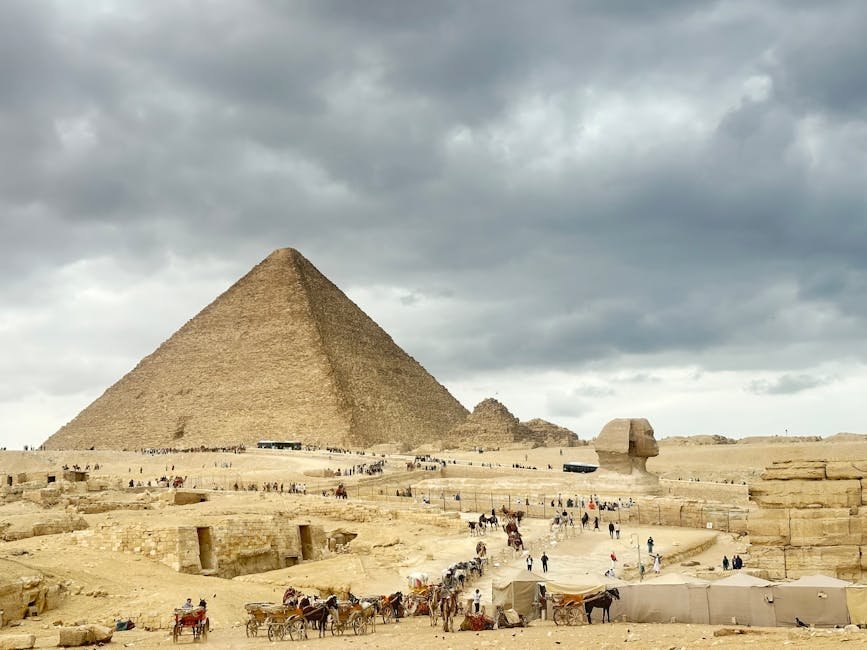
The Giza Plateau is Egypt’s most recognizable historical site, home to the last surviving wonder of the ancient world: the Great Pyramid of Khufu. Built around 2560 BCE, this colossal structure originally stood 146.6 meters tall and required an estimated 2.3 million stone blocks. The precision of its construction continues to impress engineers and archaeologists.
Nearby, the Great Sphinx—a limestone statue with the body of a lion and the head of a pharaoh—guards the plateau. Carved from a single block of stone during the reign of Khafre, it measures 73 meters long and 20 meters high. While erosion and human damage have altered its features over time, the Sphinx remains a powerful symbol of ancient Egyptian power and mystery.
Visiting Tips and Practical Advice
Arrive early in the morning to avoid crowds and the midday heat. Summer temperatures can exceed 40°C (104°F), making early access essential. Wear sun protection, sturdy shoes, and carry water. Guided tours provide valuable context, especially for understanding the alignment of the pyramids with celestial bodies.
While you can view the pyramids from outside, entering one requires a separate ticket. The Pyramid of Khufu allows limited access, with narrow passageways and low ceilings. Visitors with claustrophobia or mobility issues should consider the physical demands before purchasing an interior ticket.
Luxor: The World’s Greatest Open-Air Museum
Karnak Temple Complex
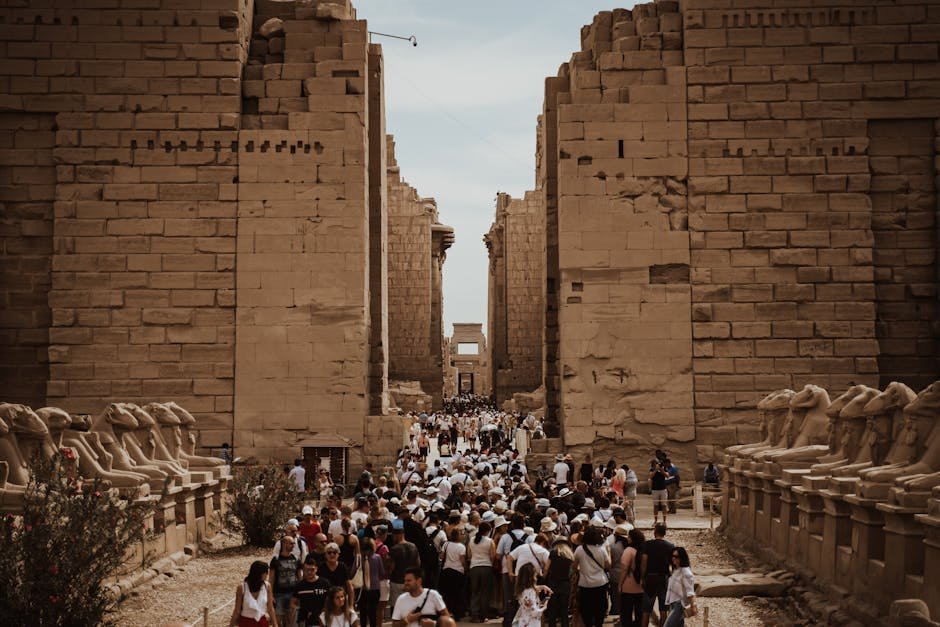
Located on the east bank of the Nile, Karnak is the largest religious complex ever built. Construction spanned over 2,000 years, with contributions from more than 30 pharaohs. The Great Hypostyle Hall alone contains 134 massive columns arranged in 16 rows, some reaching 24 meters in height.
The temple is dedicated primarily to Amun-Ra, the king of the gods, but also honors Mut and Montu. Sacred lakes, obelisks, and sphinx-lined avenues reveal the scale of ancient Egyptian devotion. The tallest standing obelisk, erected by Hatshepsut, rises 29 meters and weighs approximately 323 tons.
Valley of the Kings
Across the Nile on the west bank, the Valley of the Kings served as the burial ground for New Kingdom pharaohs from the 16th to 11th century BCE. Over 60 tombs have been discovered, including that of Tutankhamun, whose nearly intact burial chamber was found in 1922.
Tombs are carved deep into limestone hills to deter robbers. Decorated with hieroglyphs and paintings from the Book of the Dead, they depict the journey of the soul through the afterlife. Only a few tombs are open at any time to preserve fragile artwork from humidity and touch.
Luxor Temple and the Avenue of Sphinxes
Luxor Temple, connected to Karnak by a 2.7-kilometer processional road lined with sphinxes, was used for annual festivals honoring the divine marriage of Amun and Mut. Built mainly by Amenhotep III and Ramses II, the temple features colossal statues, a Roman fortification, and a mosque added in the Islamic period.
The avenue of sphinxes, once buried under sand, is now partially restored and illuminated at night. Walking this path offers a sense of how ancient Egyptians moved between sacred spaces during religious ceremonies.

Aswan: Gateway to Nubian and Pharaonic Heritage
Philae Temple and the High Dam
Philae Temple, dedicated to the goddess Isis, was relocated to Agilkia Island after the construction of the Aswan High Dam threatened to submerge it. This UNESCO-led project moved the entire structure block by block in the 1970s, preserving one of Egypt’s most beautiful temples.
The temple’s graceful columns and detailed reliefs reflect Ptolemaic and Roman influences. It remained a center of worship into the 6th century CE, long after most Egyptian temples had been abandoned. Evening sound-and-light shows enhance the experience, narrating the temple’s history under starlit skies.
Abu Simbel: Ramses II’s Monumental Legacy
Located 280 kilometers southwest of Aswan, Abu Simbel consists of two rock-cut temples built by Ramses II in the 13th century BCE. The larger temple honors the pharaoh himself and the gods Amun, Ra-Horakhty, and Ptah. Four colossal seated statues of Ramses flank the entrance, each 20 meters tall.
The smaller temple is dedicated to Nefertari, Ramses’ beloved wife, and the goddess Hathor. Its facade features six statues—four of Ramses and two of Nefertari—signifying her elevated status. Like Philae, Abu Simbel was relocated in the 1960s to avoid flooding from the dam.
Travel Considerations for Aswan
Aswan is hotter and drier than northern Egypt, making early morning or late afternoon visits more comfortable. Feluccas—traditional sailboats—offer scenic Nile cruises and a glimpse into local Nubian life. The Nubian villages near Aswan are known for their colorful houses, hospitality, and craft markets.
Travel to Abu Simbel requires a flight from Aswan or a long drive (about 3.5 hours). Flights are faster but more expensive. Overnight tours often include both temples and a guided explanation of the relocation effort.
Cairo: Where Ancient and Modern History Converge
The Egyptian Museum in Tahrir Square
Housed in a 1902 pink sandstone building, the Egyptian Museum contains over 120,000 artifacts, including the complete treasures of Tutankhamun. The gold funerary mask, weighing 10.23 kg, is one of the most famous objects in the world.
While the museum is undergoing a gradual transfer of its collection to the new Grand Egyptian Museum, many highlights remain on display. The mummy room, accessible with a supplemental ticket, features well-preserved remains of pharaohs such as Ramses II and Hatshepsut.
The Grand Egyptian Museum: A New Era
Set to become the world’s largest archaeological museum, the Grand Egyptian Museum near Giza is designed to house over 100,000 artifacts, including the full Tutankhamun collection. Its modern architecture and advanced conservation techniques aim to set new standards for museum experiences.
The museum features immersive galleries, multilingual audio guides, and climate-controlled environments. While not fully open at the time of writing, partial access is available, with full completion expected in the coming years.
Islamic and Coptic Cairo
Beyond pharaonic history, Cairo offers rich layers of Islamic and Christian heritage. Islamic Cairo boasts landmarks like the Mosque of Ibn Tulun, one of the oldest and largest mosques in Egypt, and the Citadel of Saladin, which offers panoramic views of the city.
Coptic Cairo is home to ancient churches built on Roman fortress foundations. The Hanging Church, suspended above the gatehouse of a 4th-century fortress, is one of the oldest Christian places of worship in Egypt. The Coptic Museum documents over 1,600 years of Christian art and history.

Alexandria: A Hellenistic Jewel on the Mediterranean
The Bibliotheca Alexandrina and Ancient Ruins
Founded by Alexander the Great in 331 BCE, Alexandria was once the intellectual capital of the ancient world. The original Library of Alexandria attracted scholars like Euclid and Archimedes. Though the ancient library was destroyed, the modern Bibliotheca Alexandrina serves as a tribute and research center.
The city still holds archaeological treasures, including the Kom el-Dikka Roman theater and the Catacombs of Kom el-Shoqafa, a necropolis blending Egyptian, Greek, and Roman styles. The underwater ruins of ancient Alexandria, discovered in the harbor, include statues and columns from the Ptolemaic period.
Qaitbay Citadel and the Mediterranean Coast
Built in the 15th century on the site of the ancient Lighthouse of Alexandria—one of the Seven Wonders of the Ancient World—Qaitbay Citadel offers coastal views and a glimpse into medieval military architecture. The lighthouse was destroyed by earthquakes in the 14th century.
Alexandria’s corniche and seafront provide a refreshing contrast to the desert heat of southern Egypt. Local seafood restaurants and cafes make it a pleasant stop between Cairo and the Western Desert.
Lesser-Known Gems for Deeper Exploration
Abydos: The Sacred City of Osiris
Abydos, in Upper Egypt, was one of the most important religious centers of ancient Egypt. Dedicated to Osiris, god of the afterlife, it served as a pilgrimage site for millennia. The Temple of Seti I contains some of the finest reliefs in Egypt, including the Abydos King List, which records 76 pharaohs.
The site also includes earlier royal tombs from the First Dynasty, predating the pyramids. Its remote location means fewer tourists, offering a more contemplative experience.
Dendera: The Best-Preserved Temple Complex
Located near Luxor, Dendera is home to the Temple of Hathor, one of the most complete and well-preserved temples in Egypt. Its roof still bears original colors, and the famous Dendera Zodiac—a bas-relief map of the heavens—was once housed here before being moved to the Louvre.
The complex includes a sanatorium, where visitors could receive healing dreams, and a Roman-era crypt with astronomical carvings. Evening visits with lighting enhance the temple’s grandeur.
Siwa Oasis: A Desert Haven with Ancient Roots
Deep in the Western Desert, Siwa Oasis is known for its salt lakes, palm groves, and the ancient Oracle of Amun. Alexander the Great visited Siwa in 331 BCE to consult the oracle, which confirmed his divine status. The ruined Temple of the Oracle still stands near the modern town.
Siwa’s isolation has preserved its unique Berber culture and language. The Cleopatra Bath, a natural spring, is said to have been used by the famous queen. Travel to Siwa requires a 4×4 vehicle or guided tour from Marsa Matruh or Bahariya.
Practical Tips for Historical Travel in Egypt
Best Time to Visit
The ideal time for historical exploration in Egypt is between October and April, when temperatures are mild. Winter months (December–February) are especially pleasant for outdoor sites like the Valley of the Kings and Karnak. Summer visits are possible but require early starts and frequent hydration.
Guided Tours vs. Independent Travel
Guided tours offer expert insights, skip-the-line access, and logistical support, especially for complex sites like the Grand Egyptian Museum or Abu Simbel. Independent travelers benefit from flexibility but should research site hours, ticket requirements, and local transportation in advance.
Audio guides and mobile apps can supplement self-guided visits. Download offline maps and translation tools, as English signage varies by location.
Safety and Cultural Etiquette
Egypt is generally safe for tourists, but it’s wise to stay informed about local conditions and avoid protests or crowded areas. Dress modestly when visiting religious sites—cover shoulders and knees. Photography may be restricted in tombs and museums; always check for signs or ask staff.
Respect local customs: remove shoes before entering mosques, and avoid public displays of affection. Tipping (baksheesh) is customary for guides, drivers, and service staff.
Transportation Between Sites
Domestic flights connect Cairo, Luxor, and Aswan efficiently. Trains are affordable and comfortable for shorter routes, such as Cairo to Luxor. Nile cruises between Luxor and Aswan offer a scenic way to travel while visiting riverside temples.
For remote sites like Siwa or Abu Simbel, guided tours often include transportation. Renting a car is possible but not recommended due to traffic and road conditions.
Preservation Challenges and Responsible Tourism
Many of Egypt’s historical sites face threats from pollution, urban encroachment, and overtourism. The Sphinx has suffered from air pollution and groundwater damage, while tomb paintings in the Valley of the Kings degrade with exposure to carbon dioxide from breath.
Visitors can help by staying on marked paths, not touching walls, and supporting official guides and conservation projects. Purchasing tickets contributes to site maintenance, and choosing eco-friendly accommodations supports sustainable tourism.
FAQ
What is the best time of year to explore historical sites in Egypt?
The best time is from October to April, when temperatures are cooler and more comfortable for outdoor exploration. Winter months are ideal for visiting the pyramids, temples, and tombs without extreme heat.
Do I need a guide to visit Egypt’s historical destinations?
A guide is not required, but highly recommended for deeper understanding and access to restricted areas. Official guides provide accurate historical context and help navigate complex sites like Karnak or the Valley of the Kings.
Are Egypt’s ancient sites accessible for travelers with mobility issues?
Accessibility varies. Some sites, like the Giza Plateau, have paved paths and wheelchair-friendly viewing areas. Others, such as the interior of pyramids or tombs in the Valley of the Kings, involve stairs and narrow passages and may not be suitable for all visitors. Check with tour operators in advance for accommodations.