

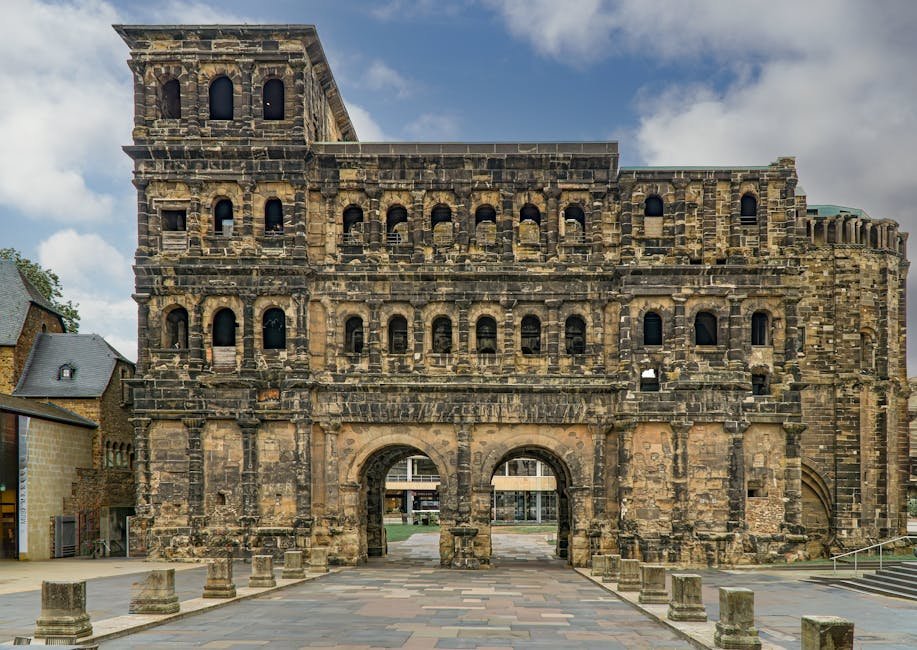
Best Historical Places in Germany
Top Destinations in Germany for History Travelers
Germany is a treasure trove of historical landmarks, from medieval castles and Roman ruins to World War II memorials and Cold War relics. For travelers passionate about history, the country offers a layered narrative spanning over two millennia. Whether you’re drawn to the grandeur of imperial palaces, the solemnity of concentration camp memorials, or the architectural legacy of divided Berlin, Germany delivers immersive, thought-provoking experiences. This guide highlights the most compelling destinations for history travelers, offering practical insights and context to enrich your journey.
Berlin: A City Shaped by Conflict and Rebirth
No list of historical destinations in Germany is complete without Berlin. As the capital of both the Prussian Empire and modern Germany, Berlin has been at the center of pivotal moments in European history. Its streets and buildings tell stories of monarchy, totalitarianism, war, division, and reunification.
The Berlin Wall Memorial and East Side Gallery
The Berlin Wall, erected in 1961, became the most potent symbol of the Cold War. Today, the Berlin Wall Memorial on Bernauer Strasse preserves a section of the original barrier, complete with a preserved death strip and documentation center. Visitors can walk along the path where families were once separated and learn about escape attempts and the human cost of division.
Just a short distance away, the East Side Gallery stretches for 1.3 kilometers along the Spree River. This open-air gallery features over 100 murals painted on the surviving eastern side of the Wall. Artworks like Dmitri Vrubel’s “My God, Help Me Survive This Deadly Love” capture the emotional weight of the era. While some murals have faded, restoration efforts continue to preserve this unique blend of history and art.
Brandenburg Gate and the Reichstag
The Brandenburg Gate, completed in 1791, has witnessed Napoleon’s triumph, Nazi rallies, and the fall of the Wall. Once a symbol of division, it now stands as a beacon of unity. Located in Pariser Platz, the gate is easily accessible and surrounded by embassies and historic buildings.
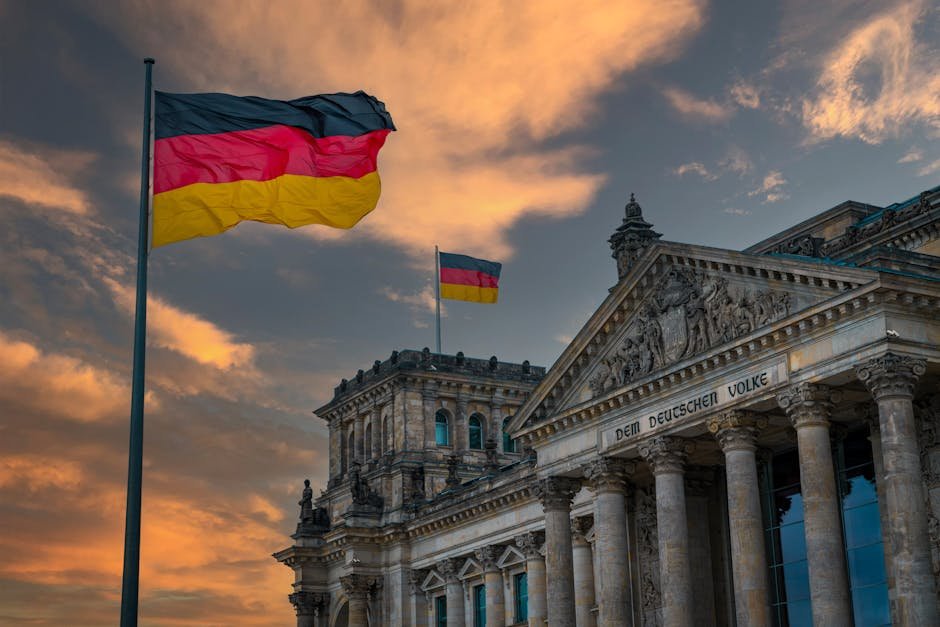
A short walk leads to the Reichstag, home to Germany’s parliament. The building’s glass dome, designed by architect Norman Foster, offers panoramic views of the city. More than a tourist attraction, the dome symbolizes transparency in government. Free timed-entry tickets are required and should be booked weeks in advance through the official Bundestag website.
Topography of Terror
This outdoor and indoor museum sits on the former site of the Gestapo and SS headquarters. Through photographs, documents, and personal accounts, it details the rise of the Nazi regime and the machinery of oppression. The exhibits are unflinching and meticulously researched, making it one of the most important Holocaust education sites in Germany.
Visitors should allow at least two hours to explore. Audio guides are available in multiple languages. The site is free to enter, but donations support ongoing preservation and educational programs.
Hamburg: Maritime Power and the Legacy of War
Hamburg, Germany’s largest port city, played a crucial role in trade, migration, and wartime industry. Its history is deeply tied to the sea, but also to the devastation of World War II and the resilience of its people.
St. Michael’s Church and the Speicherstadt
St. Michael’s Church, known locally as “Michel,” has dominated Hamburg’s skyline since the 17th century. Rebuilt multiple times after fires and bombings, its Baroque spire offers sweeping views of the port and city. The church survived the 1943 bombing raids that destroyed much of Hamburg, standing as a symbol of endurance.
Nearby, the Speicherstadt—the world’s largest warehouse district—is a UNESCO World Heritage Site. Built in the late 19th century, these red-brick warehouses were once filled with spices, coffee, and silk. Today, they house museums, shops, and the Miniatur Wunderland, the world’s largest model railway. Guided tours explain the district’s role in global trade and its architectural innovation.
Hamburg Holocaust Memorial
The Hamburg Holocaust Memorial, located in the former Jewish community center, commemorates the victims of Nazi persecution in the city. The site includes a documentation center and a memorial wall inscribed with the names of deported Jews. It’s a quiet, reflective space that emphasizes personal stories over statistics.
Visitors can join guided tours that explore the history of Jewish life in Hamburg before, during, and after the war. The memorial is open daily and free to enter, though donations are encouraged.
Heidelberg: Romance and Revolution
Nestled along the Neckar River, Heidelberg blends academic tradition with political upheaval. Home to Germany’s oldest university, founded in 1386, the city has long been a center of intellectual life. Yet it also played a role in the student movements of the 1960s and the rise of Nazism.
Heidelberg Castle
Perched above the old town, Heidelberg Castle is a romantic ruin that draws visitors with its mix of Gothic and Renaissance architecture. Though partially destroyed by lightning and war, the castle remains one of Germany’s most photographed landmarks. The Friedrich Hall houses the world’s largest wine barrel, the Heidelberg Tun, which could hold over 220,000 liters.
Guided tours explore the castle’s history, including its role as a residence for the Palatinate electors. The castle grounds offer stunning views of the river and old town, especially at sunset. A funicular railway makes the ascent easy for visitors of all ages.
Old Town and the University
Heidelberg’s Altstadt (old town) is a pedestrian-friendly maze of cobbled streets, baroque buildings, and historic squares. The Market Square, or Marktplatz, features the 18th-century town hall and a statue of the city’s founder. Nearby, the Church of the Holy Spirit once served both Catholic and Protestant congregations—a rare example of religious coexistence.
The University of Heidelberg, with its ornate main building and historic lecture halls, continues to attract scholars. The university library, founded in 1386, holds rare manuscripts and incunabula. Visitors can join guided tours to learn about student life, academic traditions, and the university’s role in German intellectual history.
Nuremberg: Trials, Triumphs, and Tragedy
Nuremberg’s history is a study in contrasts. Once a center of the Holy Roman Empire and a hub of Renaissance art, it later became the site of Nazi rallies and the postwar trials that defined international justice.
Nuremberg Castle and Imperial City
Nuremberg Castle, dating back to the 11th century, served as a key residence for Holy Roman Emperors. The Imperial Castle Museum displays artifacts from the medieval period, including armor, weapons, and royal regalia. The Sinwell Tower offers panoramic views of the city and surrounding Franconian countryside.
Below the castle, the old town features half-timbered houses, cobbled lanes, and the Hauptmarkt—the central market square. The square hosts a Christmas market each December, one of the oldest in Germany. The Church of St. Lorenz, with its intricate Gothic altar, is a must-see for art and architecture enthusiasts.
Nazi Party Rally Grounds and Documentation Center
The Nazi Party Rally Grounds, located on the southeastern edge of the city, were designed by Albert Speer for mass propaganda events. Though much of the complex was never completed, the Zeppelin Field and Congress Hall remain as stark reminders of Nazi ambitions.
The Documentation Center, housed in the former Congress Hall, provides a comprehensive look at the rise of the Nazi regime and the use of mass spectacle. Exhibits include original films, uniforms, and personal testimonies. The center emphasizes critical thinking and historical awareness, making it a powerful educational resource.
Visitors should allow at least half a day to explore the site. Audio guides are essential for understanding the complex history. The center is open daily, and admission is free.
Nuremberg Trials Memorial
The Palace of Justice, where the Nuremberg Trials took place from 1945 to 1949, is now a museum and active courthouse. Courtroom 600, where the trials were held, has been preserved and is open for guided tours. The adjacent Memorium Nuremberg Trials explains the legal proceedings, the charges against Nazi leaders, and the legacy of international criminal law.
The museum highlights the significance of the trials in establishing accountability for war crimes. Artifacts include trial transcripts, defendant statements, and photographs from the proceedings. The site is a sobering reminder of justice in the face of atrocity.
Rothenburg ob der Tauber: A Medieval Time Capsule
Rothenburg ob der Tauber is one of the best-preserved medieval towns in Germany. Encircled by intact city walls and watchtowers, it offers a glimpse into life during the Holy Roman Empire. The town’s preservation is no accident—it was spared from bombing during World War II and later restored with meticulous care.
The Town Walls and Towers
Visitors can walk the full length of the city walls, a 2.5-kilometer loop that takes about an hour. Along the way, 42 towers offer views of the Tauber Valley and the red-roofed rooftops of the old town. The walls were built between the 12th and 14th centuries and played a key role in defending the city during conflicts.
Guided wall walks are available in summer, often led by costumed guides who share stories of sieges and daily life. The walk is free, though donations support maintenance.
The Imperial City Museum
This museum, housed in a 13th-century Franciscan monastery, showcases artifacts from Rothenburg’s medieval past. Exhibits include weapons, clothing, and household items, as well as a collection of torture devices used during the Inquisition. The museum provides context for understanding social and legal norms of the time.
The museum also features a reconstructed medieval pharmacy and a gallery of local art. Admission is modest, and audio guides are available in English.
Christmas Museum and the Käthe Wohlfahrt Shop
Rothenburg is famous for its Christmas traditions, and the Käthe Wohlfahrt Christmas Museum is the largest of its kind in Germany. Open year-round, it displays vintage ornaments, nutcrackers, and Advent calendars. The adjacent shop sells handmade decorations and is a destination for collectors.
While the museum leans toward commercial appeal, it also preserves the history of German Christmas customs. The town’s Christmas market, held each December, attracts thousands of visitors.
Wittenberg: The Cradle of the Reformation
Wittenberg, officially Lutherstadt Wittenberg, is where Martin Luther launched the Protestant Reformation in 1517. The town remains a pilgrimage site for religious historians and those interested in the transformation of European Christianity.
All Saints’ Church (Schlosskirche)
It was here, on October 31, 1517, that Luther allegedly nailed his 95 Theses to the church door—an act that challenged the Catholic Church’s sale of indulgences. While the original door was destroyed in a fire, a bronze replica stands in its place. The church now serves as a memorial and museum.
Inside, visitors can see Luther’s tomb and original manuscripts. The church also hosts concerts and lectures on Reformation history. Admission is free, but donations support preservation.
Luther House and Melanchthon House
The Luther House, where Martin Luther lived from 1504 to 1546, is now a museum with over 13,000 artifacts. Exhibits include his study, personal belongings, and early printed Bibles. The building itself is a fine example of Renaissance architecture.
Nearby, the Melanchthon House honors Philipp Melanchthon, Luther’s close collaborator and a key figure in shaping Protestant theology. The museum highlights his contributions to education and religious reform.
Wittenberg Castle and the Cranach Studios
Wittenberg Castle, once a residence of the electors of Saxony, now houses the Reformation History Museum. The collection includes paintings by Lucas Cranach the Elder and the Younger, who were court artists and close friends of Luther.
The Cranach Studios, located in the town center, display original works and explain the artists’ role in spreading Reformation ideas through art. Visitors can see woodcuts, portraits, and altarpieces that shaped religious imagery in the 16th century.
Cologne: Roman Foundations and Gothic Grandeur
Cologne, or Köln, is one of Germany’s oldest cities, founded by the Romans in 50 AD. Its strategic location on the Rhine made it a vital trade and military center. Today, it blends ancient history with modern energy.
Cologne Cathedral (Kölner Dom)
The Cologne Cathedral is a UNESCO World Heritage Site and one of the most iconic Gothic structures in the world. Construction began in 1248 and was not completed until 1880—a testament to the city’s enduring commitment to its spiritual heritage.
The cathedral houses the Shrine of the Three Kings, believed to contain the relics of the Magi. Its twin spires rise 157 meters above the city, and the interior features stunning stained glass and intricate stone carvings. Visitors can climb 533 steps to the top for panoramic views.
The cathedral survived 14 direct hits during World War II and was used as a makeshift shelter. Its resilience has made it a symbol of hope and continuity.
Roman-Germanic Museum
Located next to the cathedral, this museum showcases Cologne’s Roman past. The centerpiece is the Dionysus Mosaic, a 3rd-century floor mosaic discovered during excavations. The museum also displays Roman pottery, jewelry, and tools, as well as a reconstructed Roman villa.
Guided tours explain how Cologne, then known as Colonia Claudia Ara Agrippinensium, functioned as a provincial capital. The museum is open daily, and admission includes access to the Dionysus Mosaic.
EL-DE Haus: Former Gestapo Headquarters
During the Nazi era, this building served as the regional Gestapo headquarters. Today, it houses a documentation center that details the regime’s surveillance, arrests, and persecution in Cologne. The basement cells, where prisoners were held, have been preserved.
Exhibits include interrogation records, prisoner testimonies, and photographs of resistance activities. The site is a sobering reminder of the dangers of authoritarianism. Admission is free, and audio guides are available.
Potsdam: Palaces and the Cold War
Just outside Berlin, Potsdam served as the summer residence of Prussian kings and later became a focal point of Cold War diplomacy. Its parks and palaces reflect the opulence of monarchy, while its conference sites reveal the tensions of the 20th century.
Palace of Sanssouci
Frederick the Great’s summer palace, Sanssouci, is a masterpiece of Rococo architecture. Built in the 1740s, it features ornate rooms, terraced vineyards, and a stunning view of the gardens. The name, meaning “without worry,” reflects Frederick’s desire for a retreat from court life.
Visitors can tour the palace’s 12 rooms, including the Marble Hall and the Music Room. The surrounding park includes several smaller palaces, fountains, and sculptures. A combined ticket allows access to multiple sites.
The New Palace and Orangery
The New Palace, built to celebrate Prussia’s victory in the Seven Years’ War, is larger and more formal than Sanssouci. It hosted diplomatic events and royal ceremonies. The Marble Hall, with its gilded ceiling and crystal chandeliers, is particularly impressive.
The Orangery Palace, once used to house citrus trees, now contains a museum of Prussian art and history. The building’s long façade and symmetrical design make it a highlight of the park.
Potsdam Conference Site
In 1945, the Cecilienhof Palace hosted the Potsdam Conference, where Truman, Stalin, and Churchill discussed the postwar order. The rooms where the leaders met have been preserved, and a small museum explains the decisions that shaped modern Europe.
Visitors can see the original conference table, maps, and documents from the negotiations. The site is open daily, and guided tours provide historical context. Admission is included in the combined palace ticket.
Essential Tips for History Travelers in Germany
To make the most of your historical journey, plan ahead and respect local customs. Many sites offer free or discounted entry with a museum pass, such as the Berlin Museum Pass or the Brandenburg Museum Card. These can save time and money, especially in cities with multiple attractions.
Audio guides and English-language tours are widely available, but booking in advance is recommended for popular sites like the Reichstag or Nuremberg Trials Memorial. Wear comfortable shoes—many historical areas involve walking on cobblestones or uneven terrain.
Photography is usually permitted in outdoor areas and museums, but flash and tripods may be restricted. Always check signage or ask staff. Some memorial sites, such as concentration camps, request silence and prohibit photography out of respect for victims.
Finally, be mindful of opening hours. Many museums close on Mondays, and some historical sites reduce hours in winter. Check official websites before visiting.
FAQ
What is the best time of year to visit historical sites in Germany?
Spring (April to June) and early fall (September to October) offer mild weather and fewer crowds. Summer is peak tourist season, especially in cities like Berlin and Heidelberg. Winter can be cold, but historic Christmas markets add a unique charm.
Are historical sites in Germany accessible for visitors with mobility issues?
Many sites have made efforts to improve accessibility, including ramps, elevators, and wheelchair-friendly paths. However, older buildings like castles and churches may have limited access. Check individual websites or call ahead to confirm facilities.
Do I need to speak German to visit historical museums and memorials?
No. Most major museums, memorials, and tourist sites offer information in English, including audio guides, brochures, and signage. Staff at popular destinations are generally fluent in English.